
Understanding hormonal health can be tough, with symptoms affecting your daily life. It’s hard to tell if you’re dealing with common menstrual issues or something more serious. Knowing the difference between PMDD vs PMS is key to managing your health better.
While both are linked to the menstrual cycle, they impact your health in different ways. Recent pmdd vs pms research shows that mild symptoms are common. But, severe mood disorders need a special approach. Accurate identification is the first step to improving your life.
It’s also important to understand how these patterns change over time, as you get older. For example, knowing the difference between PMDD vs perimenopause can help avoid wrong diagnoses. By following evidence-based guidelines, you can make choices that support your mental and physical health.
Key Takeaways
- Both conditions are linked to the luteal phase of the menstrual cycle.
- PMDD is characterized by severe, often disabling mood-related symptoms.
- Prospective symptom tracking for two cycles is critical for an accurate diagnosis.
- Evidence-based treatments include lifestyle changes, therapy, and targeted medication.
- Distinguishing between these conditions helps avoid unnecessary or ineffective interventions.
Key Differences Between PMDD and PMS
Many people feel changes each month, but PMDD and PMS are different. Premenstrual Syndrome (PMS) brings mild changes that don’t mess up your day. On the other hand, Premenstrual Dysphoric Disorder (PMDD) is a severe condition that needs special care.
Trying to figure out your symptoms? Check out PMDD or perimenopause: how to know for sure. PMDD causes deep mood swings, like extreme anger, worry, or sadness. These feelings are so strong they can ruin your job, social life, and relationships.
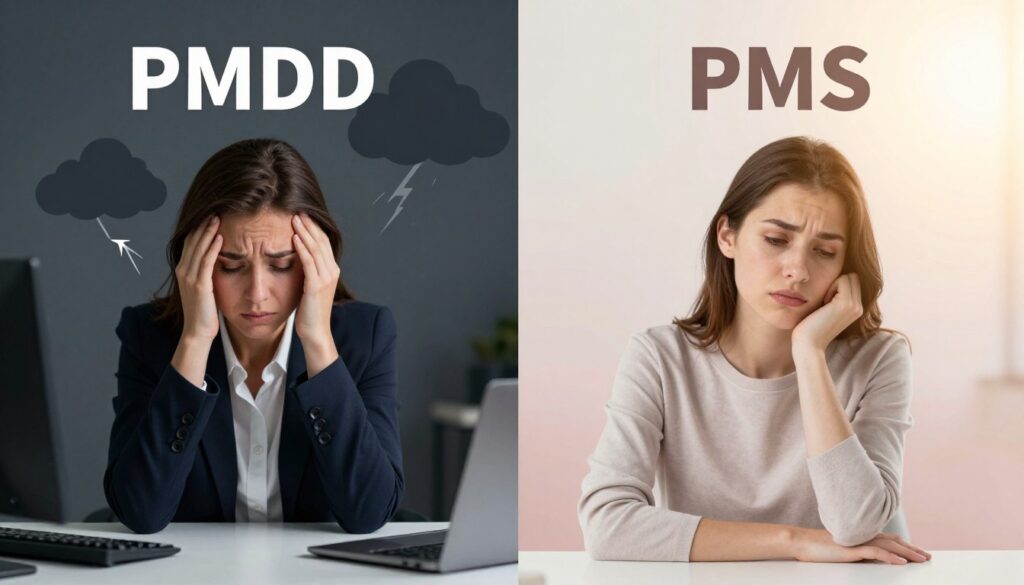
Knowing the difference between PMDD and PMS helps you find your way in healthcare. While PMS is common, PMDD’s impact is not something you should face alone. By keeping a symptom journal, you can help your doctor figure out what you’re going through.
| Feature | PMS | PMDD |
|---|---|---|
| Symptom Intensity | Mild to moderate | Severe and debilitating |
| Impact on Life | Minimal disruption | Significant functional impairment |
| Primary Focus | Physical discomfort | Psychological distress |
| Clinical Status | Common experience | Distinct medical diagnosis |
Symptom Severity
It’s important to know the difference between PMS symptoms and PMDD symptoms. PMS can cause some discomfort, but PMDD can really affect your daily life. It’s more intense than regular PMS.
Tracking your symptoms every day is key. This helps your doctor understand if you have PMDD and perimenopause or something else. Keeping a detailed record is vital for a correct diagnosis.

The severity of your symptoms determines how much help you need. Understanding the difference between these conditions helps you ask for the right care.
Comparing Symptom Profiles
Here’s a quick guide to help you figure out what you’re experiencing:
- Physical: Both can cause bloating or sore breasts, but PMDD might make you feel really tired or give you migraines.
- Behavioral: You might feel like staying home or not getting much done during the luteal phase.
- Psychological: PMDD often brings intense anger, hopelessness, or anxiety that can hurt your relationships.
| Feature | PMS | PMDD |
|---|---|---|
| Impact on Life | Mild to Moderate | Severe/Disruptive |
| Primary Focus | Physical discomfort | Emotional/Behavioral |
| Tracking Need | Helpful | Essential |
Remember, symptom severity guides your doctor. If your symptoms are too much to handle, get help. Talking openly about your cycle is the first step to feeling better.
Diagnostic Considerations
If you think you might have PMDD, learning about the diagnostic process is key. A PMDD diagnosis isn’t just about how you feel one day. It’s about a detailed process that follows strict guidelines.
To confirm PMDD, you need to track your symptoms every day. Do this for at least two menstrual cycles. This helps doctors tell if your symptoms are real or just stress.

Your doctor will look for a pattern of emotional and physical issues in the luteal phase. It’s important to rule out other health problems that might seem like PMDD. Sometimes, symptoms can look like other conditions, so a professional check is needed.
Using standardized tools helps make sure your PMDD diagnosis is right. Using prospective data helps avoid mistakes. This way, your doctors can make a treatment plan just for you.
Getting a clear PMDD diagnosis lets you take charge of your health. By giving your doctor daily logs, you help them understand you better. This teamwork is key to managing your symptoms well.
Research Findings
Looking into pmdd vs pms research shows us what science backs up and what’s just a story. Many people try supplements to feel better, but the proof is not always strong or clear.
Studies often look at nutrients like calcium, magnesium, vitamin D, and omega-3s. They think these might help with mood and inflammation. To learn more about an anti-inflammatory diet for PMDD, check out how these foods can help your hormones.
When we compare pmdd vs pms research, we see some big challenges. Many studies are small or short, making it hard to know if supplements work long-term. Consistency is key, but studies often don’t consider how different people start out.
There’s a lot we don’t know, like how different supplements work together. While some nutrients seem promising, we need bigger, better studies to be sure. So, always talk to a doctor before starting any supplements.
| Nutrient | Primary Benefit | Evidence Strength |
|---|---|---|
| Calcium | Mood stabilization | Moderate to High |
| Magnesium | Reduced water retention | Moderate |
| Omega-3 | Inflammation control | Emerging |
| Vitamin D | Hormonal balance | Moderate |
Staying up-to-date on pmdd vs pms research helps you make smart choices. By looking at the best studies, you can find ways to help your symptoms. And you’ll know the limits of what science knows right now.
FAQ
Understanding PMDD can be tough. You need clear answers to your big questions. Managing it well often means making lifestyle changes and getting medical help that fits you.
Looking for natural ways to help your body? Check out the best supplements for PMDD based on research. Always talk to your doctor before trying anything new to make sure it’s right for you.

Talking to your doctor is a key step in your treatment. Keep a symptom diary for two to three months. This gives your doctor the info they need to diagnose you correctly.
When you talk about your symptoms, share how they affect your life, work, and relationships. Don’t be shy about asking about the science behind any treatment, like hormones, antidepressants, or lifestyle changes.
The table below shows common management strategies and what they focus on. It can help you get ready for your next doctor’s visit:
| Strategy | Primary Focus | Evidence Level |
|---|---|---|
| Lifestyle Changes | Diet, exercise, and sleep hygiene | Moderate |
| SSRIs | Serotonin regulation | High |
| Hormonal Therapy | Ovulation suppression | High |
| Cognitive Therapy | Stress and mood management | Moderate |
Your health journey is unique, and knowledge is power. By choosing evidence-based methods, you can make choices that help you manage symptoms and improve your health over time.
Conclusion
Understanding the difference between PMS and PMDD is key to managing your well-being. You have the power to change your health journey. This is by using data and getting advice from doctors.
Keeping track of your symptoms helps you and your doctor. It’s a vital tool for your treatment. It makes sure your treatment fits your needs, not just guesses.
Adding herbal remedies for PMDD to your routine can help. Chasteberry and saffron are backed by science for mood and symptom relief. Always choose high-quality, standardized products for safety and effectiveness.
Your journey to feeling better starts with taking action on your hormonal balance. Mix evidence-based lifestyle changes with medical support. This way, you fight for the quality of life you want. Stay informed, be patient with your body, and seek care that matches your health goals.